Buzz Aldrin is one of only twelve people who have ever walked on the Moon. On July 20, 1969, he followed Neil Armstrong down the ladder of the Lunar Module Eagle and became the second human to step onto another world. Decades later, people still want to know: what did the Moon really feel like to the men who stood on it? And what happened to Aldrin after he came home?

You May Have Seen the Viral Videos
Many videos and posts online claim that Buzz Aldrin “broke down in tears” and revealed that “the Moon is not what you think.” There is no record of Aldrin ever saying this. These headlines are made up to attract clicks. The real story, told in Aldrin’s own interviews and books, is more interesting and far more human.
“Magnificent Desolation”
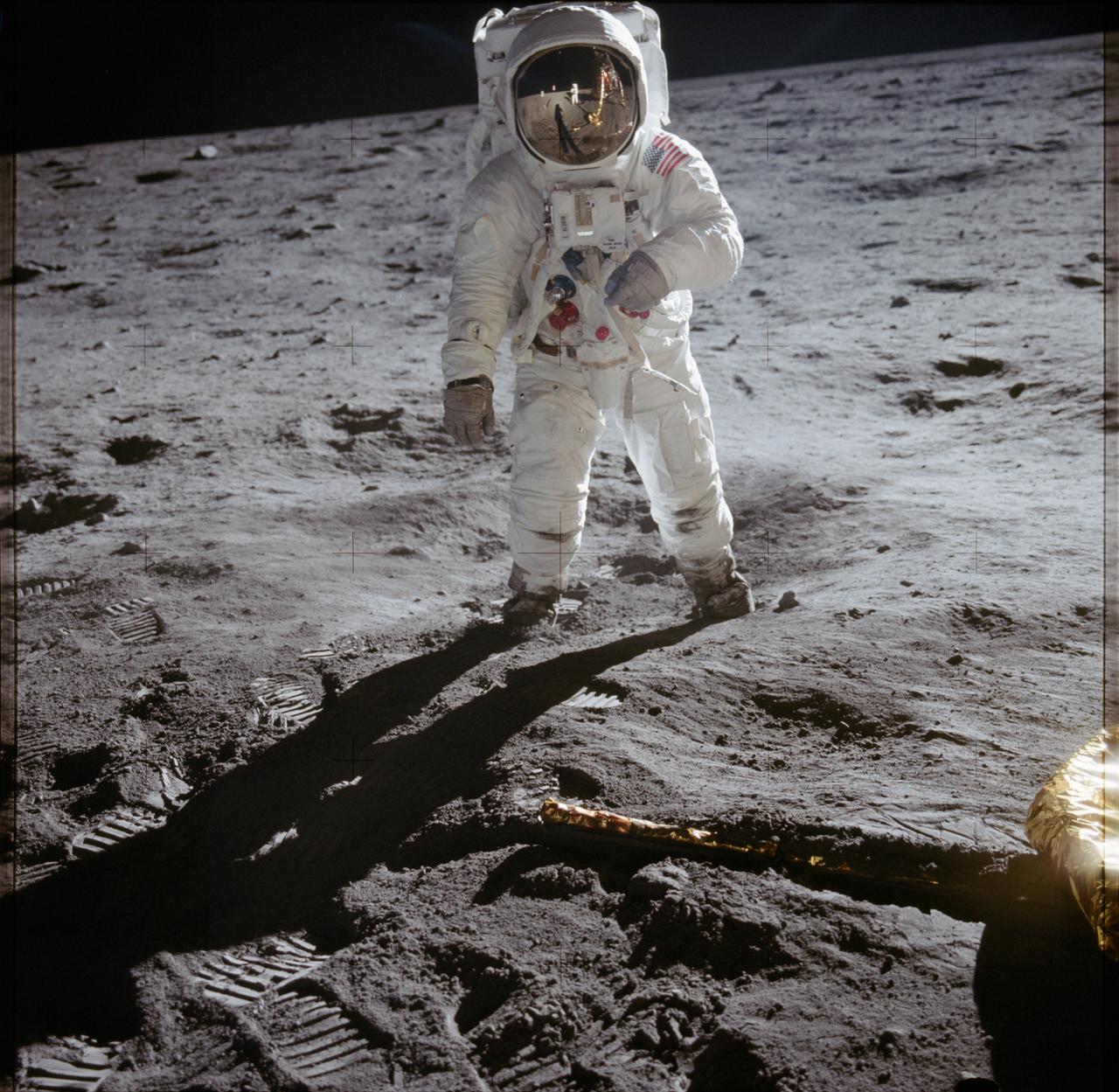
When Aldrin first looked around the lunar surface, he described the scene with two words that became famous: “magnificent desolation.” The Moon was magnificent because of what it meant: humans had travelled about 384,000 kilometers to stand on it. It was desolate because there was no air, no water, no sound and no life. The sky above was completely black, even in full sunlight.
Aldrin later explained that judging distance was surprisingly difficult. With no atmosphere to soften faraway objects, rocks and hills that were far away looked sharp and close. The gray soil was fine like powder and stuck to everything, including the astronauts’ boots and suits.
Moving in One-Sixth Gravity
On the Moon, gravity is about one-sixth as strong as on Earth. Aldrin tested different ways of moving, including a loping, kangaroo-like hop. He found that he had to plan several steps ahead to stop or change direction, because his body kept moving longer than expected. The bulky spacesuit and backpack made balance even trickier.

One of the most famous images from the mission shows a single bootprint in the lunar dust. Aldrin photographed it as part of a study of how the soil behaved. Because the Moon has no wind or rain, prints like this can remain unchanged for a very long time.
Work, Not Sightseeing
The moonwalk lasted only about two and a half hours, and most of it was carefully planned work. Aldrin helped set up a seismometer to detect moonquakes and a laser reflector that scientists still use to measure the distance between Earth and the Moon. He also collected rock samples and took many of the photographs we know today.

Watch the Moonwalk
NASA has restored the original footage of the Apollo 11 moonwalk. In this video you can see Aldrin and Armstrong working on the surface just as viewers did in 1969:
The Struggle After Coming Home
Returning from the Moon made Aldrin one of the most famous people in the world. But he later admitted that life afterward was very hard. After years of training toward a single goal, he asked himself: what comes next? He struggled with depression and alcoholism in the years after Apollo 11.
Aldrin chose to speak openly about these struggles at a time when few public figures did. He wrote about them in his books Return to Earth and Magnificent Desolation, sought treatment and became sober in the late 1970s. His honesty helped many people understand that even heroes face mental health challenges, and that asking for help is a sign of strength.
A Lifelong Champion of Space
In the decades that followed, Aldrin became one of the strongest voices for space exploration. He promoted ideas for reaching Mars, including an orbital path now known as the “Aldrin cycler,” and spent years encouraging young people to study science and engineering.
The Real Lesson
The Moon was not a place of secret discoveries or hidden shocks. It was a silent, beautiful and hostile world that tested human courage and skill. Buzz Aldrin’s real story is not about tears on camera. It is about reaching an incredible goal, facing personal difficulties honestly and continuing to inspire others for the rest of his life.